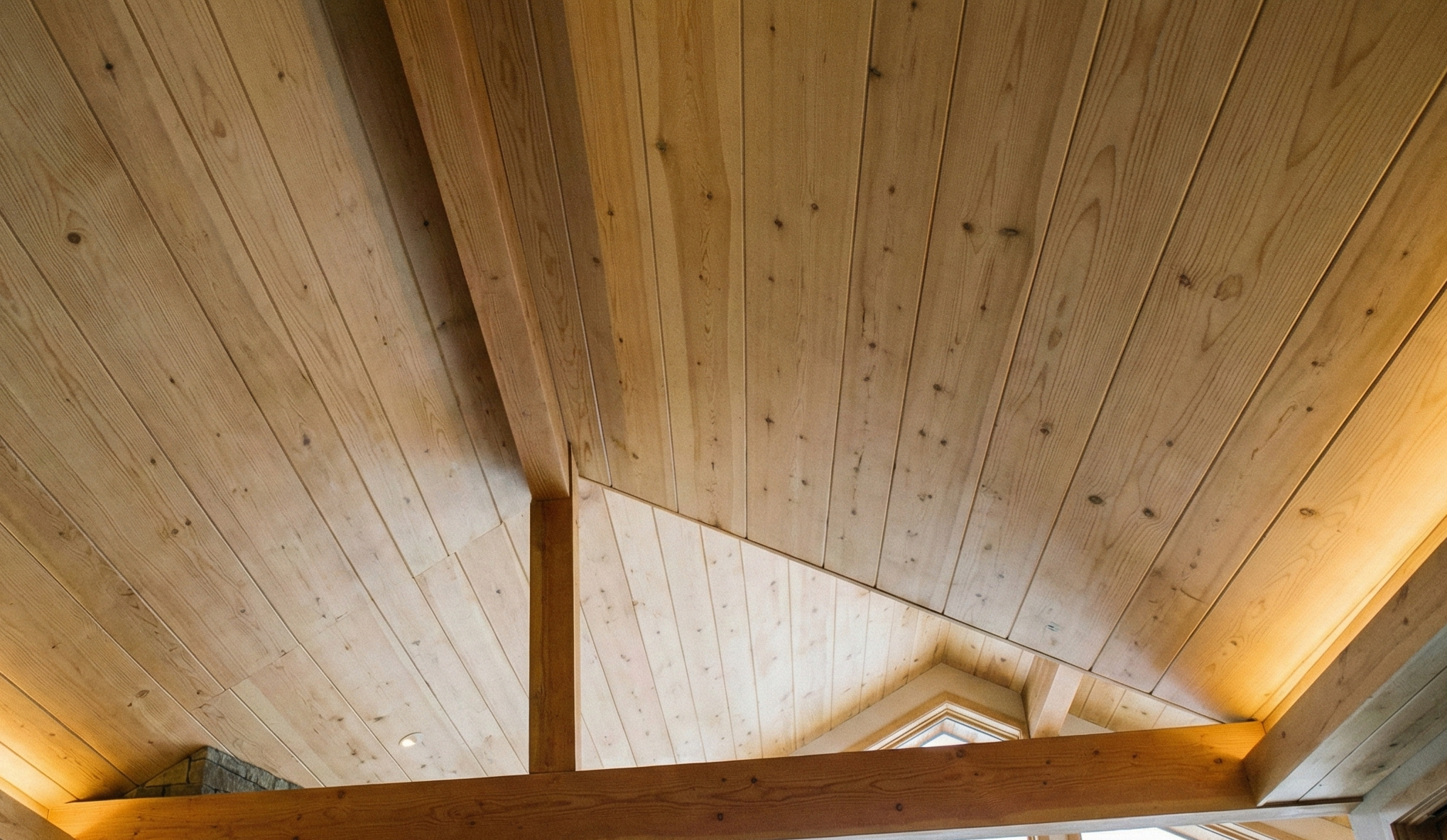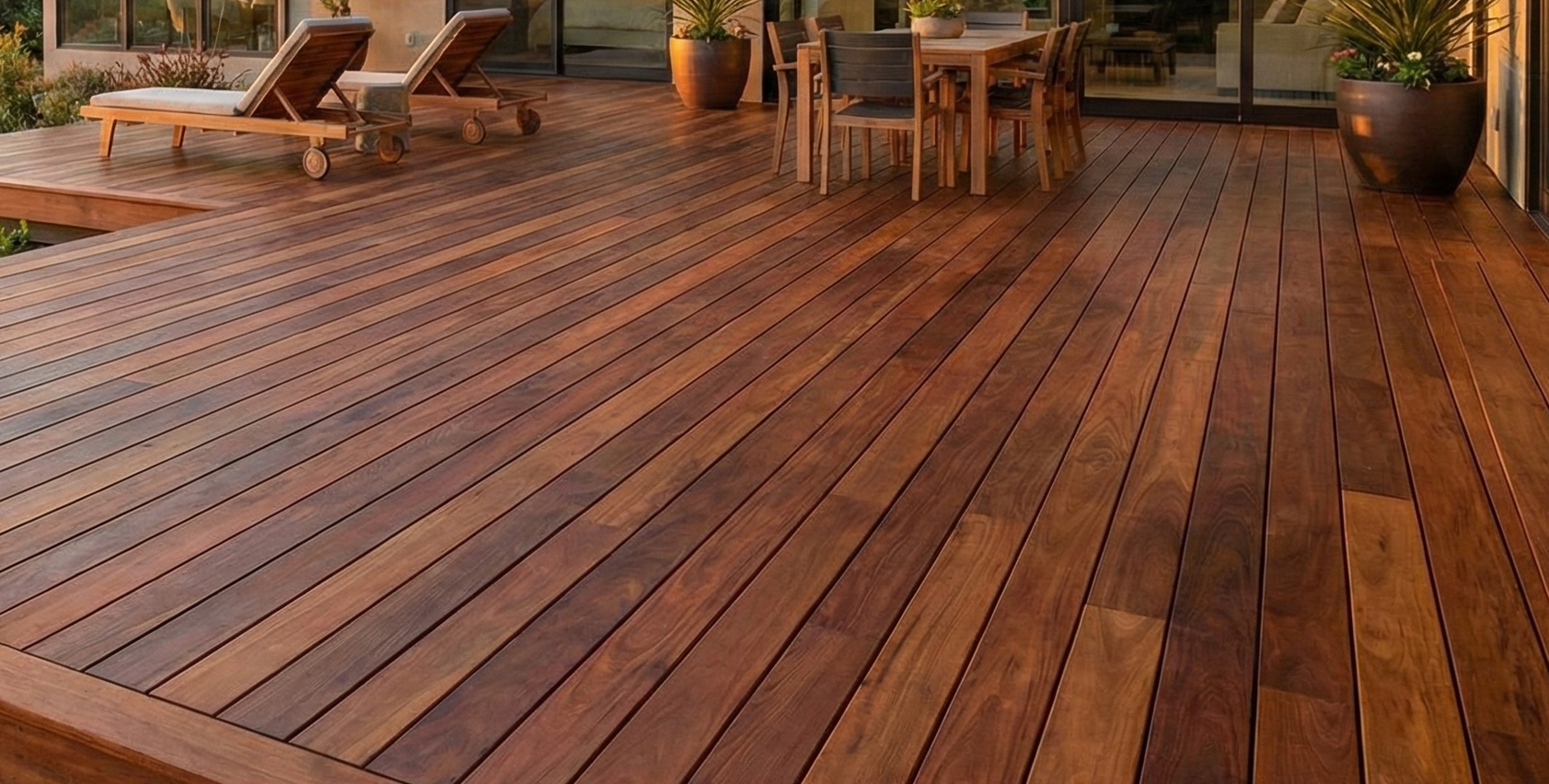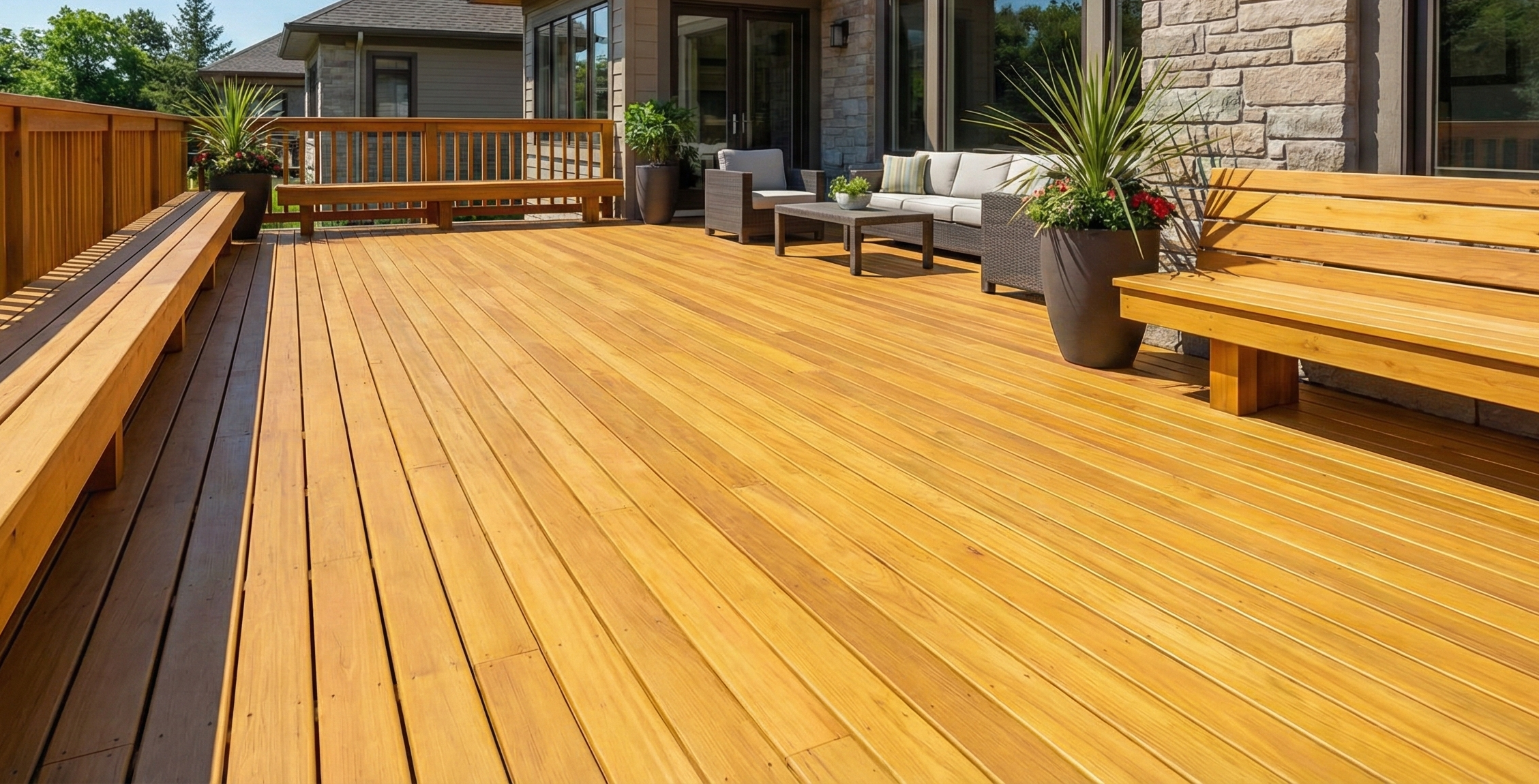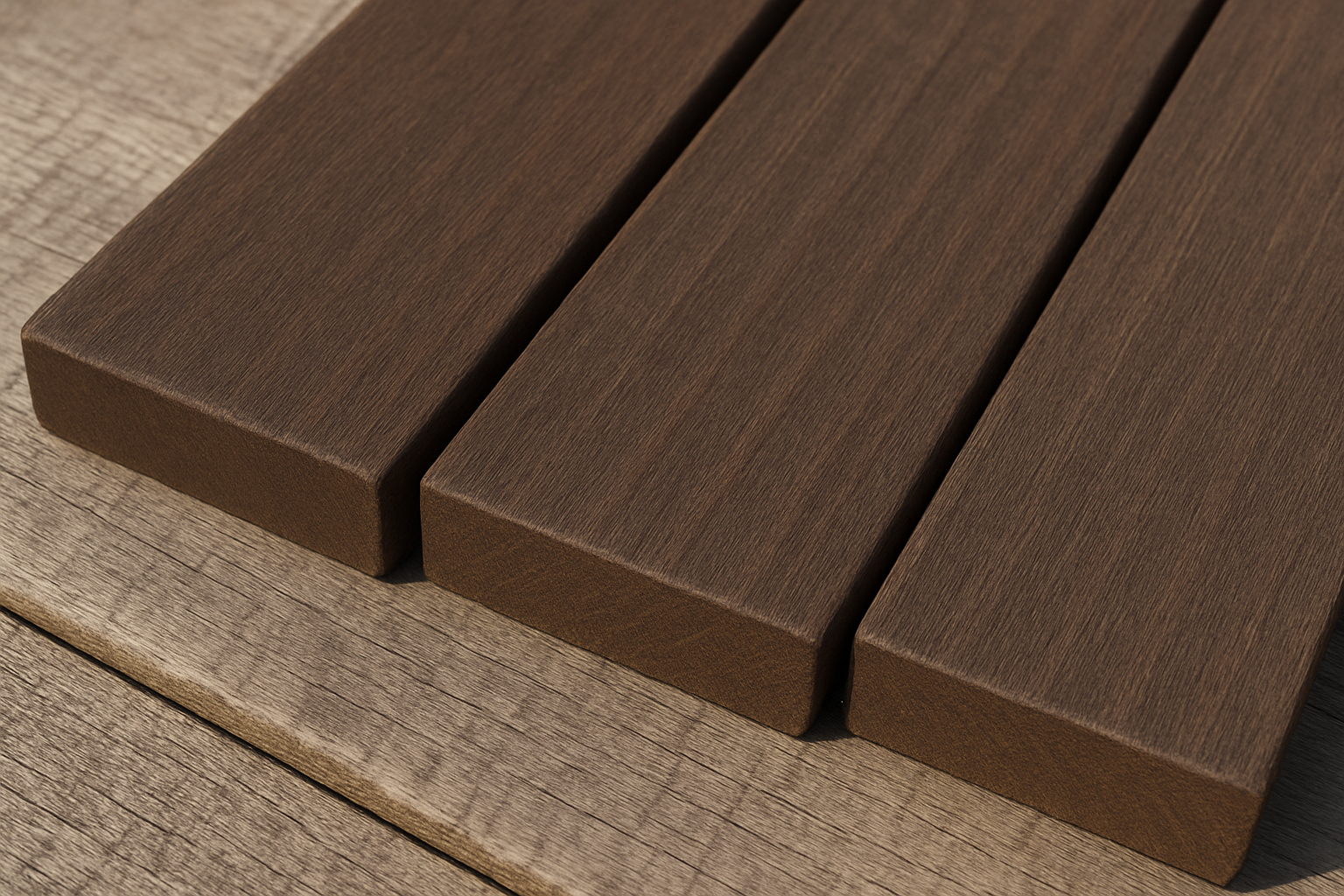
Lumber profiles define the shape, joint method, and exposed face of every board. Understanding the difference between profiles helps you choose the right product for your application—whether it's a deck, a ceiling, exterior siding, or interior flooring.
Nominal vs. Actual Sizing
Every piece of lumber is referred to by its nominal size, which is the rough-sawn dimension before planing. After surfacing (planing smooth), the board is smaller than its nominal label. This is the actual dimension—the real measurement you'll work with on the job site.
| Nominal Size | Actual Size (Surfaced) |
|---|---|
| 1x4 | 3/4" x 3-1/2" |
| 1x6 | 3/4" x 5-1/2" |
| 1x8 | 3/4" x 7-1/4" |
| 1x10 | 3/4" x 9-1/4" |
| 1x12 | 3/4" x 11-1/4" |
| 5/4x6 | 1" x 5-1/2" |
| 2x4 | 1-1/2" x 3-1/2" |
| 2x6 | 1-1/2" x 5-1/2" |
When a board is further milled with a tongue-and-groove or overlap joint, the exposed face width is even smaller than the actual width because part of the board is hidden in the joint. For example, a nominal 1x6 tongue-and-groove board has an actual width of 5-1/2" but an exposed face of only 5". Always calculate material quantities using the exposed face width, not the nominal or actual width.
Profile Categories
Square Edge
S4S, E4E, and S1S2E surfacing options. The simplest profile—flat faces, square edges, no interlocking joint. Used for trim, shelving, furniture, and general construction.
Tongue & Groove
V-Joint, Nickel Gap, Flooring Match, Edge Bead, and Center Bead profiles. Interlocking joints for ceilings, paneling, flooring, and siding.
Overlap Siding
Channel Rustic, Plain Bevel (Clapboard), True Shiplap, and Dutch Lap (German Siding). Horizontal siding profiles with overlapping joints for weather protection.
Decking Profiles
Pre-Grooved, Standard Solid E4E, and Porch Flooring T&G. Profiles engineered for outdoor foot traffic and hidden fastener systems.
Rustic & Log
Channel Rustic, Wavy Edge Cedar (Haida Skirl), and D-Log siding. Textured profiles for cabins, lodges, and mountain architecture.